Boiler House Safety: Why It’s Essential for Safe and Compliant Operations

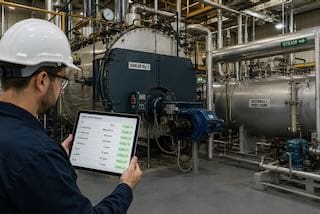
Boiler houses are among the most hazardous environments in industrial and commercial settings.
They combine high pressure, high temperatures, chemicals, and electrical systems — all within often confined plant room spaces.
That’s why safety in the boiler house is not optional.
It’s essential.
At Deep Water Blue Ltd, our engineers work in these environments every day. Safety isn’t treated as a tick-box exercise — it’s embedded into everything we do.
Why Boiler House Safety Matters
A boiler house presents multiple risks that must be identified, assessed, and controlled through a suitable and sufficient risk assessment.
Failure to manage these risks can lead to:
- Serious injury or fatality
- Equipment damage and system failure
- Regulatory non-compliance
- Operational downtime
Key Boiler House Safety Risks and Controls
🦺 Personal Protective Equipment (PPE)
Using the correct PPE is critical when carrying out tasks such as:
- Water testing
- Chemical dosing
- Blowdown operations
- Inspections
Depending on the activity, this may include:
- Eye protection
- Chemical-resistant gloves
- Face shields
- Protective clothing
- Slip-resistant footwear
PPE is the last line of defence — but it must always be appropriate for the task.
👷 Lone Working in Boiler Houses
Boiler water treatment engineers often work alone, which introduces additional risk.
Effective lone working controls should include:
- Clear communication protocols
- Site sign-in and sign-out procedures
- Emergency escalation processes
These measures ensure that help is available quickly if something goes wrong.
⚗️ Chemical Handling and COSHH Compliance
Boiler treatment chemicals must be managed safely at all times.
This includes:
- Up-to-date COSHH assessments
- Safe storage and handling procedures
- Correct dosing and dilution methods
- Spill response planning
- Access to emergency washing facilities
Poor chemical management can result in both health risks and system damage.
🌡️ Heat and Pressure Hazards
Boilers operate under extreme conditions, making awareness essential.
Key risks include:
- Hot surfaces and pipework
- Blowdown discharge
- Flash steam release
- Incorrect isolation procedures
Strict adherence to safe systems of work is critical to prevent serious incidents.
⚡ Electrical and Mechanical Risks
Boiler houses contain a range of electrical and mechanical equipment, including:
- Control panels
- Pumps and dosing systems
- Automated controls
Engineers must be trained to:
- Recognise live equipment
- Follow isolation procedures
- Apply lock-off/tag-out systems where required
🚪 Access, Egress and Housekeeping
Plant rooms are often:
- Confined
- Poorly ventilated
- High-temperature environments
Maintaining safe conditions requires:
- Clear walkways
- Adequate lighting
- Good housekeeping
- Effective ventilation
These controls are essential for reducing slips, trips, and manual handling risks.
The Importance of Dynamic Risk Assessment
Safety is not static.
Every visit to a boiler house should begin with a dynamic risk assessment, taking into account:
- Current site conditions
- Changes in plant operation
- New or emerging hazards
Engineers must be empowered to stop work and reassess if conditions change.
Safety Is Part of System Performance
Boiler water treatment is often viewed purely in terms of system efficiency and performance.
But it is also about:
- Protecting people
- Maintaining safe working environments
- Ensuring regulatory compliance
Because ultimately:
A safe boiler house is a well-managed boiler house.
Supporting Safer Boiler Operations
At Deep Water Blue Ltd, we support organisations with:
- Boiler house risk assessments
- Chemical handling and COSHH reviews
- Water treatment programme optimisation
- Compliance and safety improvements
Helping you achieve safer, more efficient, and fully compliant operations.